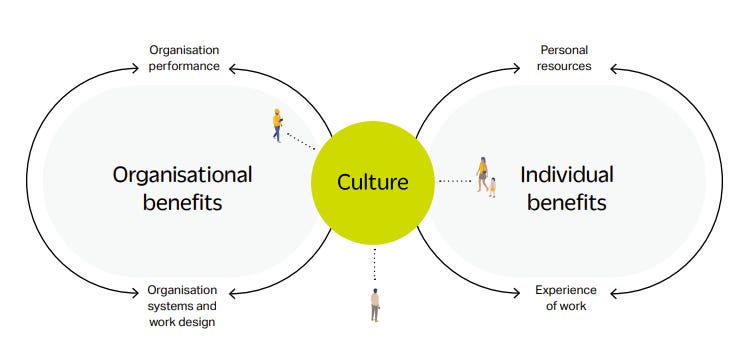
Regulated by Design 1.14
Discover more from Behaviour Intelligence
We have spent decades asking students, teachers, and leaders to regulate themselves inside systems that quietly undermine regulation at every turn. Regulated by Design offers a different starting point.
By this point in this series, regulation should no longer feel like a “soft” idea.
It is structural.
It is measurable.
And increasingly, it is legally relevant.
Psychosocial Hazard Management Through a Regulation Lens
Across jurisdictions, schools now carry explicit responsibilities to identify and manage psychosocial hazards - those aspects of work that, if left unaddressed, harm mental health, wellbeing, and organisational stability. In Western Australia, the Work Health and Safety Act 2020 and the accompanying Code of Practice: Psychosocial Hazards in the Workplace make that expectation clear. Internationally, standards such as ISO 45003 reinforce the same message: psychological safety at work is not optional. It must be managed.
But here is the bridge many schools have not yet crossed:
Most psychosocial hazards are chronic dysregulators.
And regulation is the mechanism that explains how they do their damage.
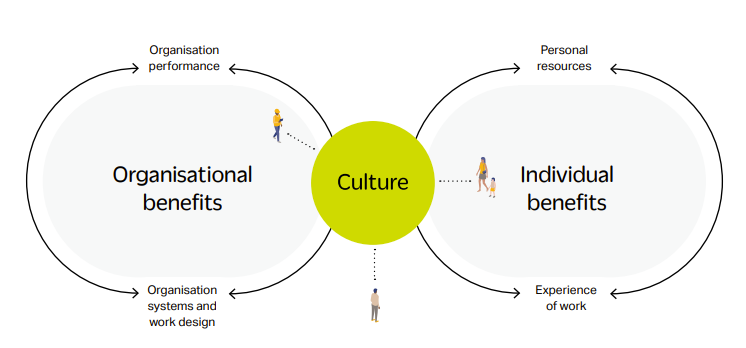
Hazards as Chronic Dysregulators
Workload.
Role ambiguity.
Poor support.
Inconsistent leadership.
Change fatigue.
Emotional demand.
These are not abstract categories for a compliance register. They are lived nervous system experiences.
When workload is excessive, the nervous system remains activated.
When roles are unclear, vigilance rises.
When decisions are inconsistent, trust erodes and scanning increases.
When change stacks without consolidation, predictability collapses.
Over time, this produces the same pattern we have traced throughout this book:
Attention narrows
Patience thins
Conflict increases
Decision quality declines
Burnout spreads
Psychosocial hazards are not simply morale issues. They are regulation failures at scale.
Why Traditional Compliance Falls Short
In many schools, psychosocial risk management has become procedural rather than practical.
Surveys are conducted.
Hazards are listed.
Registers are updated.
Policies are written.
But the lived experience of staff remains unchanged.
Why?
Because hazards are often treated as categories rather than conditions.
“Workload” is identified, but pace is not redesigned.
“Role conflict” is noted, but decision rights remain blurred.
“Support” is referenced, but systems still rely on emotional labour.
The paperwork improves.
The nervous systems remain under load.
A regulation lens forces a different question:
What in this environment is keeping people’s nervous systems in a state of prolonged activation?
Until that is answered structurally, compliance remains cosmetic.
The Hierarchy of Controls - Applied Properly
Risk management has long recognised that the strongest controls act on the source of risk, not on the individual.
Eliminate the hazard.
Substitute it.
Engineer it out.
Administratively control it.
Then - and only then - rely on personal coping.
When applied to psychosocial hazards, the contrast is stark.
Weak Control (Bottom of Hierarchy)
Mindfulness sessions
Staff wellbeing workshops
Self-care messaging
Strong Control (Top of Hierarchy)
Redesign workload distribution
Stabilise change sequencing
Clarify role expectations
Reduce unnecessary meetings
Resilience is not wrong.
It is simply not sufficient.
If the system continuously dysregulates, asking individuals to regulate harder is not responsible risk management.
It is misplaced burden.
Behaviour as a Psychosocial Risk Indicator
One of the most overlooked risk signals in schools is recurring behaviour difficulty.
Clusters of disruption often align with:
Excessive cognitive load
Poor instructional clarity
Transition instability
Leadership ambiguity
Staff fatigue
When behaviour issues intensify, it is rarely only a student issue.
It is frequently a system strain indicator.
This reframes behaviour data as risk data.
Not something to suppress, but something to interpret.
Leadership as Upstream Risk Control
Psychosocial hazard management cannot be solely delegated to HR or wellbeing committees.
Because the most significant hazards are produced by:
How change is paced
How decisions are communicated
How expectations are clarified
How workload is designed
How conflict is contained
These are leadership acts.
Leaders regulate hazard exposure every day through structural decisions.
When leaders reduce uncertainty, hazard exposure falls.
When leaders allow urgency to become constant, hazard exposure rises.
When leaders stabilise routines, nervous systems settle.
When leaders stack initiatives, arousal remains high.
Regulation is not separate from compliance.
It is compliance done intelligently.
From Legal Duty to Moral Clarity
Duty of care is often interpreted narrowly, as responding appropriately when harm has already occurred.
But from a regulation perspective, duty of care is preventive.
If we know that:
chronic overload harms
unclear roles exhaust
unmanaged emotional labour depletes
relentless pace destabilises
Then failing to redesign these conditions becomes an active choice.
Not an unavoidable reality.
The law now names psychosocial risk.
Regulation explains how it operates.
Design determines whether it persists.
From Compliance to Capability
There is a deeper opportunity here.
Schools that design for regulation are not merely meeting legal standards.
They are building capability.
Capable systems:
Think clearly under pressure
Recover from stress
Adapt without fracturing
Retain skilled educators
Maintain relational stability during change
Regulation is the foundation of all of these.
When psychosocial hazard management is approached through a regulation lens, something powerful happens:
The work of compliance merges with the work of school improvement.
Fewer reactive interventions.
Less burnout.
More clarity.
More stability.
More capacity.
The Larger Pattern
At this stage in the book, the argument should feel cohesive:
Dysregulation is not a personal flaw.
Regulation is environmentally shaped.
Design prevents breakdown.
Leadership stabilises systems.
Psychosocial hazards are regulation failures made visible.
This is not an additional responsibility for schools.
It is simply one that can no longer be ignored.
Because when we understand psychosocial hazards through the nervous system, the path forward becomes clear:
You do not manage risk by urging people to cope.
You manage risk by designing systems that do not chronically dysregulate the people inside them.
And once that shift is made, compliance stops being a burden.
It becomes alignment.
In the next chapter, we return to a familiar and cherished idea - connection - and examine why, despite its importance, connection alone was never strong enough to carry modern schooling.
Not because it doesn’t matter.
But because it was asked to compensate for design.
Thanks for reading Behaviour Intelligence! Subscribe for free to receive new posts and support my work.


