Regulated by Design 1.07
Discover more from Behaviour Intelligence
We have spent decades asking students, teachers, and leaders to regulate themselves inside systems that quietly undermine regulation at every turn. Regulated by Design offers a different starting point.
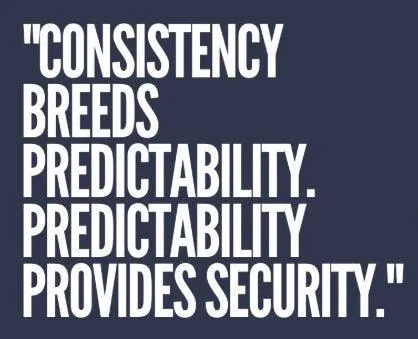
Predictability Is the First Intervention
When schools struggle with behaviour, the instinct is often to intervene loudly.
New strategies.
Thanks for reading Behaviour Intelligence! Subscribe for free to receive new posts and support my work.
Subscribe
Harder consequences.
Longer conversations.
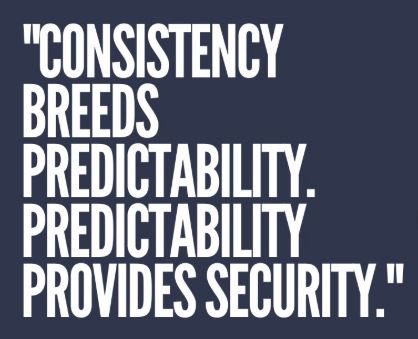
But regulation rarely improves through intensity, it improves through predictability. Predictability is not exciting. It does not feel like an intervention. And precisely because of that, it is often underestimated.
This chapter argues a simple point:
Predictability regulates nervous systems before behaviour ever appears.
Why the Brain Craves Predictability
From a nervous system perspective, unpredictability equals risk.
When people cannot anticipate what is coming next:
vigilance increases
attention narrows
emotional reactivity rises
This is true for young children, adolescents, adults, and leaders alike.
Predictability answers the nervous system’s most urgent question:
What happens now?
When that question is answered clearly and consistently, the brain relaxes its threat response.
This is not about control.
It is about conservation.
Why Schools Accidentally Create Unpredictability
Most unpredictability in schools is not deliberate.
It comes from:
inconsistent routines
variable responses to the same behaviour
shifting expectations across classrooms
last-minute changes
unclear instructions
Each instance may seem minor. But nervous systems do not experience them in isolation. They experience them accumulatively. What looks like flexibility to adults often feels like instability to students.
Routines Are Not About Compliance
Routines are frequently misunderstood as tools for obedience.
In reality, routines are cognitive relief.
They:
reduce decision fatigue
lower cognitive load
free attentional resources
stabilise emotion
A well-designed routine removes the need to constantly scan, ask, or guess.
That is regulation.
When routines are absent, behaviour fills the gap.
The Transitions That Matter Most
Transitions are where regulation is most fragile.
Entering the room.
Starting learning.
Moving between tasks.
Getting attention.
Ending the lesson.
When transitions are under-designed:
time is lost
behaviour escalates
emotional energy drains
When transitions are over-designed, they feel controlling. The goal is clear, efficient, and boring.
Boring systems are calming systems.
Why Consistency Beats Strictness
Predictability is created not by severity, but by reliability. A calm, consistent response regulates more effectively than a harsh, inconsistent one.
In predictable systems:
the same behaviour receives the same response
tone remains steady
boundaries do not fluctuate with mood
This allows nervous systems to stop testing and start settling. Students do not push boundaries because they want chaos.
They push to locate certainty.
Predictability Protects Connection
One of the paradoxes of predictability is that it increases relational trust.
When expectations are clear:
correction feels fair
boundaries feel safer
interactions feel less personal
This protects relationships.
In unpredictable systems, every correction feels emotional.
In predictable systems, correction feels procedural.
That distinction matters deeply for regulation.
When Predictability Is Mistaken for Rigidity
Some educators fear that predictability will stifle creativity or responsiveness.
This is a misunderstanding.
Predictability applies to:
how learning starts
how attention is gained
how transitions occur
how correction is delivered
Within those structures, flexibility can flourish.
Structure creates freedom.
It is chaos that constrains.
Predictability as a Staff Wellbeing Strategy
Predictability regulates adults as much as students.
Clear meeting structures.
Reliable decision-making processes.
Consistent expectations across teams.
These reduce:
emotional spillover
conflict
burnout
When staff know what to expect, they conserve energy for what matters.
Designing Predictability at Scale
The most effective schools do not leave predictability to individual preference.
They agree on:
core routines
shared language
common responses
Not to remove autonomy, but to reduce friction.
Predictability at scale allows individual expertise to shine without destabilising the system.
Why This Comes First
Predictability sits at the beginning of regulation because it stabilises everything else.
Without it:
connection becomes fragile
instruction becomes harder
behaviour escalates
With it:
calm increases quietly
effort decreases
capacity expands naturally
This is why predictability is not an add-on.
It is the first intervention.
In the next chapter, we turn to a less obvious but equally powerful idea: instruction itself is one of the strongest regulation tools schools have, when it is designed with the nervous system in mind.
Thanks for reading Behaviour Intelligence! Subscribe for free to receive new posts and support my work.


